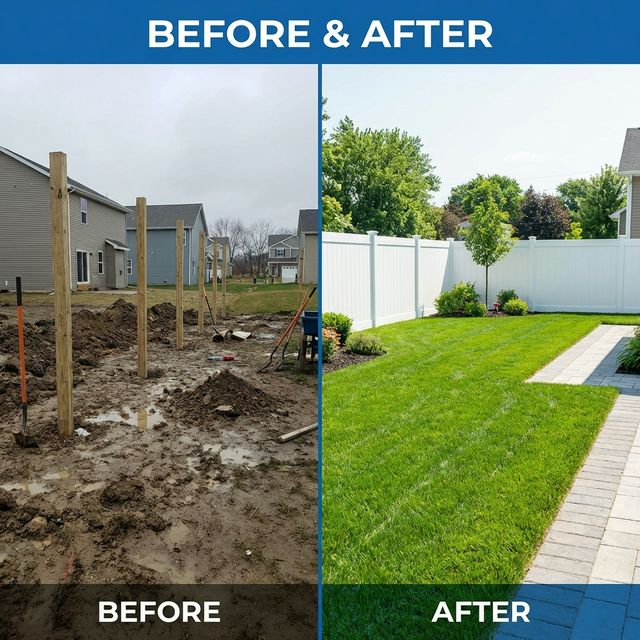
How Much Does a Fence Cost in the Phoenixville, PA Area?
Transparent pricing for vinyl, wood, and aluminum fence installation. Get an honest breakdown of fence costs so you can budget confidently — no surprises.
How Much Does a Fence Cost? (Quick Answer)
Most residential fence installation projects in the Phoenixville, PA area cost between $5,000 and $20,000. The exact price depends on three factors: material (vinyl, wood, or aluminum), linear footage, and gate count. Below is the typical installed cost range per material for a standard 150-foot residential project with one walk gate.
| Material | Typical 150' Project | Lifespan | Maintenance |
|---|---|---|---|
| Pressure-Treated Pine | $4,500 – $9,000 | 10–15 years | Seal every 2–3 years |
| Cedar | $6,500 – $14,000 | 15–25 years | Optional sealing |
| Vinyl | $7,000 – $18,000 | 30+ years | Hose-rinse twice yearly |
| Aluminum | $8,000 – $16,000 | 50+ years | None (powder-coated) |
Ranges are for fully installed 150-foot residential projects in our Chester, Montgomery, Delaware, and Berks county service area as of 2026. Final price depends on access, gate count, and grade — request a free written estimate for your specific property.
How We Price Fencing: By the Section
Most fence companies quote by the linear foot — but that doesn't tell the whole story. At The Fence Flamingo, we think in sections because that's what actually drives the cost of your project.
What's a Section?
A fence section is the panel of fencing between two posts. For vinyl and wood, a standard section is typically 6 to 8 feet wide. Each section requires post installation — which is the most labor-intensive part of the job.
Why Sections Matter
Two projects with the same total footage can have very different costs. A straight run of 100 feet needs fewer posts than 100 feet with multiple corners, angles, and gates. More sections = more posts = more work.
Honest Pricing
Section-based pricing gives you a clearer picture of what your fence will actually cost. No surprises when we show up and find your project needs more posts than a simple "per-foot" estimate assumed.
Quick math: A typical backyard with 200 feet of fencing might need 25–30 sections depending on the layout. A property with lots of corners, jogs, or short runs might need 35+ sections for the same footage — and that means more posts, more labor, and a different price.
Cost Per Section by Material
Each section includes the panel, post, and installation. Pricing varies based on fence height, style, and site conditions.
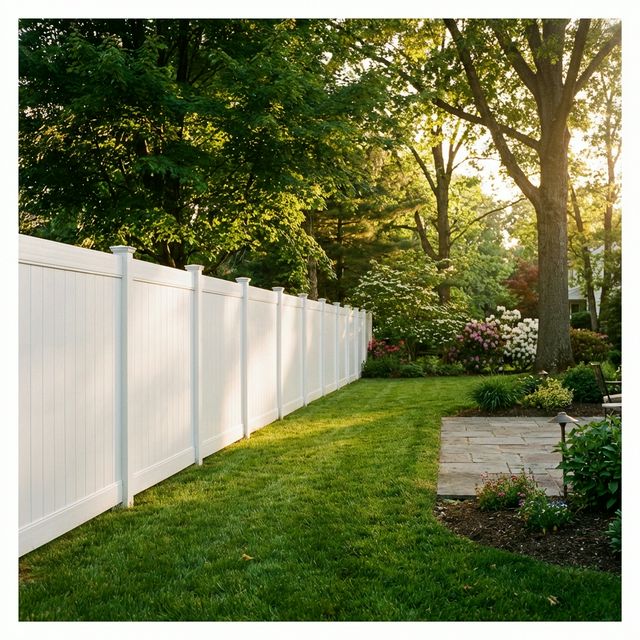
Vinyl Fencing
$175 – $400
per section, installed
- Privacy (6ft): $250–$400/section
- Picket (4ft): $175–$300/section
- Zero maintenance — no painting or staining
- Lifespan: 20–30+ years
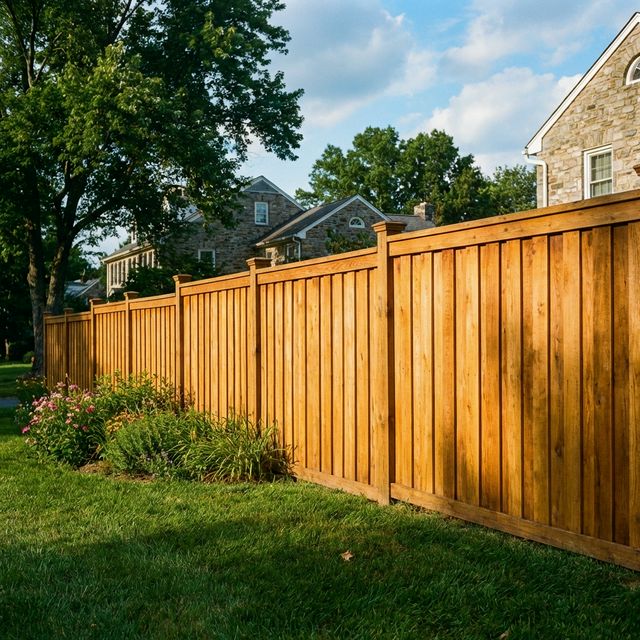
Wood Fencing
$150 – $375
per section, installed
- Privacy (6ft): $200–$375/section
- Picket (4ft): $150–$275/section
- Cedar premium adds $40–$75/section
- Lifespan: 15–20 years with proper care
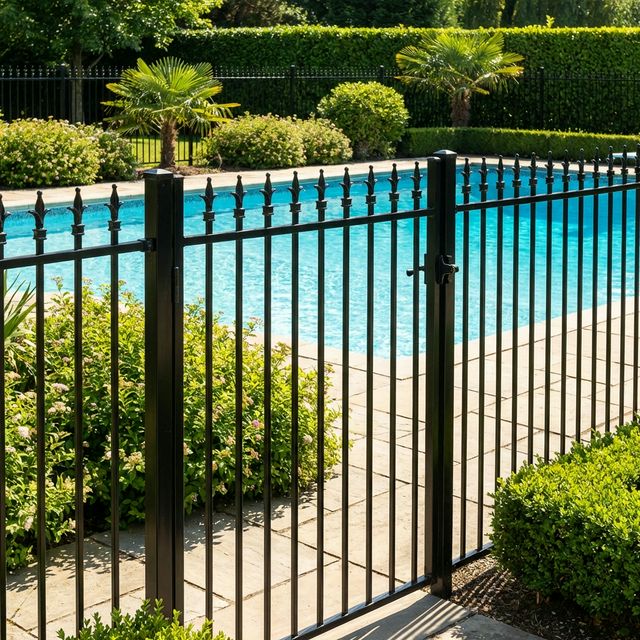
Aluminum Fencing
$200 – $475
per section, installed
- Ornamental (4ft): $200–$375/section
- Pool fence (5ft): $250–$475/section
- Rust-resistant, minimal maintenance
- Lifespan: 30+ years
Typical Project Estimates
Here's what homeowners in Chester and Montgomery County typically pay based on project size. Remember — the number of sections depends on your specific layout, not just total footage.
| Project Size | Sections | Vinyl | Wood | Aluminum |
|---|---|---|---|---|
| Small Project | 10–15 sections | $2,500–$6,000 | $2,000–$5,500 | $3,000–$7,000 |
| Average Yard | 20–30 sections | $5,000–$12,000 | $4,000–$11,000 | $6,000–$14,000 |
| Large Property | 35–50+ sections | $8,000–$20,000 | $6,500–$18,000 | $9,000–$23,000 |
| Pool Enclosure | 10–18 sections | $2,500–$7,000 | N/A | $3,000–$8,500 |
💡 Why identical footage can cost differently: A straight 150-foot run along a property line might only need 20 sections. But 150 feet wrapping around a yard with corners, a gate opening, and a jog around a patio might need 28+ sections — each one requiring a post installation.
📐 We'll count your sections for you: When you request a quote, we measure your specific layout and give you an exact section count. No guessing, no surprises. Get your quote →
What Affects Your Fence Cost?
Total Linear Footage
More fence = lower cost per foot. We measure your full perimeter to give you the best price.
Fence Height
Standard 4ft vs 6ft privacy — taller fences need more material. 8ft is available for maximum privacy.
Terrain & Slope
Hilly or rocky terrain in Chester County can add cost due to extra labor for grading and post-hole adjustments.
Gates & Hardware
Single walk gates start around $500+. Double drive gates for vehicles start around $1,000+ depending on material and width.
Old Fence Removal
Need an old fence torn out? Removal typically adds $3–$10 per linear foot depending on material, concrete footings, and disposal needs.
Permits
Many Chester County townships require fence permits ($25–$100). We handle the paperwork so you don't have to.
Installation Method Matters More Than You Think
How your fence posts are set is one of the biggest factors in both cost and long-term strength. We use no-dig installation with schedule 40 steel pipe — and here's why it's a better investment.
No-Dig Installation
Posts are driven into the ground using schedule 40 galvanized steel pipe — the same heavy-duty pipe used in commercial and industrial applications. The steel pipe is driven deep into the ground, and the fence post slides over it, creating a reinforced anchor system.
- Proven stronger than concrete — Independent testing shows schedule 40 steel pipe anchoring resists more lateral force than traditional concrete-set posts in most soil conditions
- More budget goes to materials — Because installation is faster, less of your money goes to labor. More of your budget is invested in the schedule 40 steel pipe and the fence materials themselves
- Faster installation — Less time on your property means less disruption to your yard and landscaping
- Easier future repairs — Individual posts can be replaced without disturbing the rest of the fence or digging up concrete
Bottom line: For the same project budget, no-dig gives you a stronger fence because you're paying for schedule 40 steel reinforcement instead of concrete and the labor to pour it.
Traditional Dig-and-Set
The traditional method involves digging deep post holes (typically 24–36 inches), setting the post in the hole, and filling with concrete to hold it in place. This has been the industry standard for decades.
- Higher labor costs — Digging holes, mixing concrete, and waiting for cure time adds significant labor hours to the project
- Concrete adds cost — You're paying for bags of concrete plus the labor to mix and pour — budget that could go toward better materials
- More yard disruption — Deep holes and concrete work means more mess and longer installation times
- Difficult repairs — If a post needs replacing, you're breaking out concrete, removing it, and starting over from scratch
Note: Traditional dig-and-set may still be necessary in certain situations, such as gate posts requiring extra rigidity or unique soil conditions. We'll recommend the best approach for your specific project.
Why does this matter for cost? With no-dig installation, the labor savings get redirected into higher-quality materials. You're getting schedule 40 galvanized steel pipe inside every post — making your fence significantly stronger — often at the same overall budget as a traditional concrete-set fence.
Get a Quote for Your Fence Project
Every project is different. Use our free quote tool for an instant, transparent estimate — or call us and we'll walk you through it.